Iran's Foreign Minister Heads to India This Week , And the Timing Could Not Be More Critical
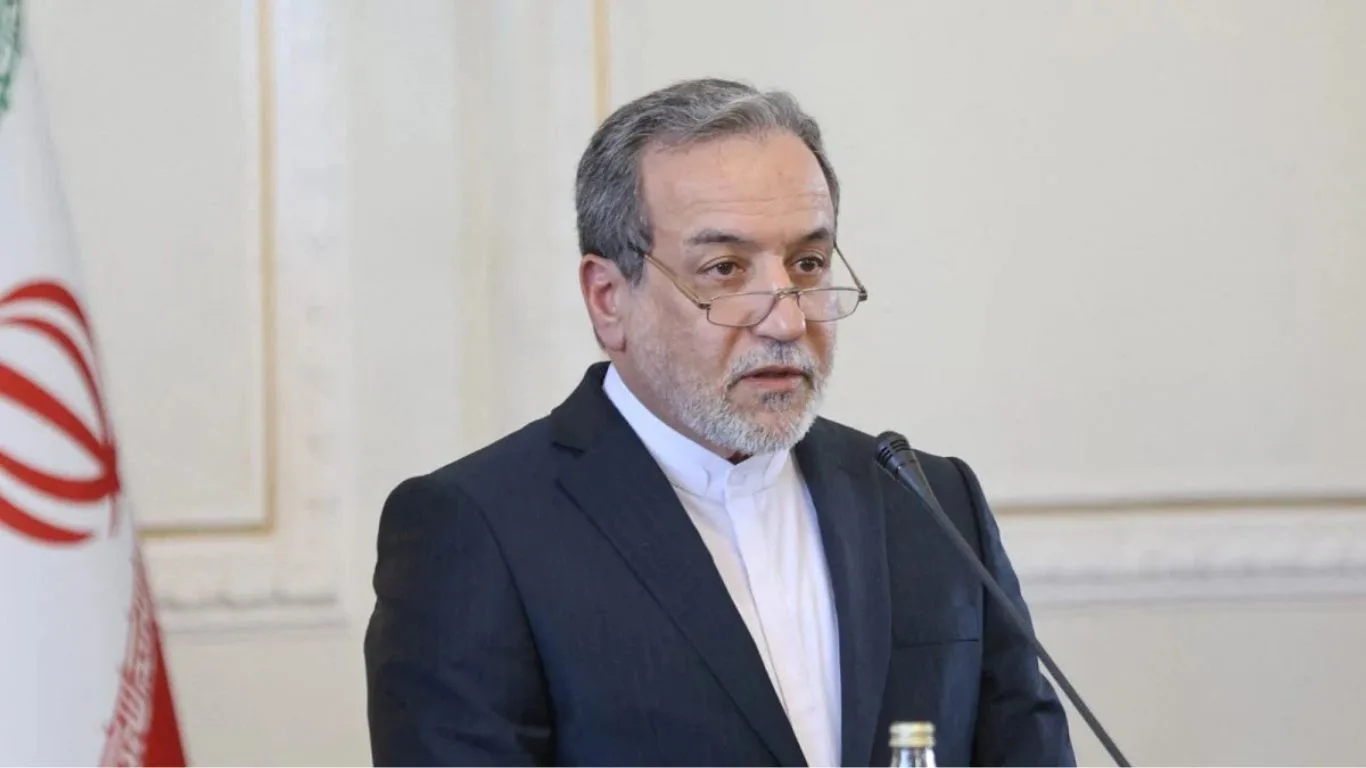
There is something quietly significant about a diplomat boarding a flight in the middle of a war. Iranian Foreign Minister Abbas Araghchi is expected to land in New Delhi this week , and if you follow the politics of the Middle East even loosely, you know this visit carries weight far beyond the usual diplomatic pleasantries.
The backdrop: a fragile ceasefire between Iran and the United States, brokered just weeks ago, is still holding , barely. The Strait of Hormuz, which handles roughly 20 per cent of the world's seaborne oil trade, remains choked. The war that began on February 28, 2026, when Israel and the United States launched airstrikes against Iran, killing Supreme Leader Ali Khamenei, has reshaped the entire geopolitical order of West Asia. And in that landscape, Araghchi is flying to India.
So what is actually happening here? And why does it matter for ordinary people , not just foreign policy analysts?
Why Araghchi's India Visit Matters Right Now , More Than It Normally Would
The official reason for the visit is the BRICS Foreign Ministers' Meeting, scheduled for May 14–15 in New Delhi under India's 2026 BRICS chairmanship. India took over the BRICS chair from Brazil on January 1 and is hosting the grouping under the theme "Building for Resilience, Innovation, Cooperation and Sustainability." That is the formal framing.
But seasoned observers know what the real conversation will be.
Since the US-Iran confrontation erupted in late February, External Affairs Minister S. Jaishankar and Araghchi have stayed in regular contact , reviewing the evolving situation together, keeping the diplomatic line open. This visit, described by sources in Tehran as Araghchi's first trip to India since the outbreak of hostilities, will be their most significant face-to-face engagement since the war began.
At the top of New Delhi's list: the safe passage of Indian-flagged vessels through the Strait of Hormuz. India imports a significant share of its oil through that strait. Between mid-March and late March alone, five Indian-flagged LPG carriers were evacuated from the strait and escorted by Indian Navy warships. India's energy security is not an abstract concern. It is a very concrete, very immediate one.
Read More:Vijay's Tamil Nadu Power Bid: What Is Really Happening and Why This Political Drama Is Far From Over
Araghchi, to his credit, had earlier announced that ships from India, China, Russia, Iraq, and Pakistan would be allowed to transit the strait , a recognition of these countries' neutral stance in the conflict. But the situation remains volatile.
What BRICS Has to Do With a Gulf War
This is the part people often miss, so it is worth slowing down here.
BRICS , the grouping of major emerging economies , is no longer just the original five nations. After the 2024 expansion, it now includes Brazil, China, Egypt, Ethiopia, India, Indonesia, Iran, Russia, Saudi Arabia, South Africa, and the UAE. Eleven nations. Some of them are on opposite sides of this conflict diplomatically. Iran and the UAE, for instance, have historically complicated relations. Saudi Arabia has its own calculations.
And yet they all sit together at the BRICS table.
Iran joined BRICS formally in 2024. Since then, Tehran has made clear that it sees the grouping as a vital platform , one capable of shaping global governance outside the Western-dominated order. With the war raging and Western countries largely backing or acquiescing to the US-Israel position, BRICS represents one of the few multilateral stages where Iran can engage with major global powers without being isolated.
That is a powerful reason for Araghchi to make the trip.
Russia's Sergey Lavrov is also expected to attend. China's Wang Yi will reportedly be absent, as President Trump's China visit overlaps with the dates , an awkward scheduling clash that itself tells you something about how crowded the global diplomatic calendar has become.
The Ceasefire That Is Holding , For Now
On April 7–8, a two-week ceasefire was announced between the US, Iran, and Israel , brokered remarkably by Pakistan, through Prime Minister Shehbaz Sharif and Army Chief Asim Munir. Iran accepted the deal. It was extended. But the Strait of Hormuz, which Iran had promised to reopen as part of the ceasefire conditions, remains effectively closed. The US has imposed a counter-blockade targeting ships heading to Iranian ports since April 13.
Both sides accuse the other of violations. Trump announced and then paused "Operation Project Freedom" , a US Navy mission to escort ships through the strait. Iran launched a new maritime traffic mechanism through the IRGC Navy. The situation is what you might call a "dual blockade" , each side blocking the other, each side calling the other the aggressor.
It is in this context that Araghchi lands in New Delhi. Iran needs economic lifelines. It needs countries like India , neutral, influential, a member of BRICS , to keep pushing for de-escalation and to keep trading. Iran's government has assessed its own economic damage at anywhere from $300 billion to $1 trillion since the conflict began.
India's Careful Position in the Middle of It All
India has walked a careful line throughout. The Ministry of External Affairs expressed concern and called for a ceasefire. Prime Minister Modi spoke with Gulf leaders. India condemned attacks on sovereignty , without naming Iran. The condolence book for Khamenei was quietly signed by Foreign Secretary Vikram Misri, without elaboration.
Read More:Himanta Biswa Sarma Resigns as Assam CM: What Comes Next and Why This Moment Is Bigger Than It Looks
That kind of deliberate, measured ambiguity is Indian foreign policy doing what it does best. New Delhi does not want to alienate the US. It cannot afford to antagonise Iran, from which it has historically sourced oil and to which it is connected through the Chabahar port project , a strategic gateway to Central Asia.
The BRICS meeting gives India a platform to advocate for de-escalation without making it look like a unilateral position. A joint BRICS statement , if one can be achieved , would signal the group's collective voice on West Asia crisis diplomacy and multilateral peace efforts.
What This Means Going Forward
If the New Delhi meetings go well, they could lay the groundwork for the full BRICS leaders' summit later in 2026, at which the Iran situation will inevitably be a central conversation. Iran's Deputy Foreign Minister Kazem Gharibabadi is also expected to participate in the BRICS deliberations, suggesting Tehran is fielding a serious delegation , not a token presence.
For India, hosting this meeting at such a moment is also a statement: that New Delhi is a relevant actor in one of the most consequential geopolitical crises of the decade. India's BRICS chairmanship 2026 and the diplomatic weight it brings are not incidental. It is part of how India positions itself as a voice of the Global South , a stabilising force that talks to everyone.
Whether that stabilising force can actually influence the outcome in West Asia is a different question. But the conversations happening in New Delhi this week will be worth watching, because the choices made in multilateral rooms often shape what happens on the ground , quietly, eventually, in ways that show up months later.
Disclaimer: This article is based on information available across the web. Parchar Manch does not take responsibility for its complete accuracy, as the content could not be fully verified.
Read More: When Fashion Becomes Living Art: 2026 Met Gala “Costume Art” Theme Explained